I never thought much about my basement drain until water started creeping across the floor after a heavy storm. That one moment changed everything for me.
I started digging into everything I could find, and what I learned genuinely surprised me.
Most homeowners have no idea how many types of basement floor drains actually exist, or how much the wrong one can end up costing them.
Some drains stop sewage backup. Others handle groundwater.
A few do both. And some simply fail when you need them most.
So which one is actually protecting your home right now? Keep reading, because the answer might surprise you.
Understanding Basement Floor Drain Systems

A basement floor drain is a drainage point built into the floor to collect and redirect water. It sits low in the floor so water naturally flows toward it.
Most homeowners do not think about it until something goes wrong.
It serves a few key purposes. It handles overflow from water heaters, washing machines, and heavy rain. It also protects against sewage backup and flooding.
Without it, standing water can cause mold, structural damage, and expensive repairs.
The basic working principle is simple. Water flows downhill toward the drain opening due to gravity. The floor around the drain is usually sloped slightly inward to help with this.
From there, water travels through pipes connected to your main sewer line or sump system.
Choosing the right drain type matters more than most people think. A drain that works well in a utility room may be totally wrong for a finished living space.
Knowing what your basement is used for helps you pick the right fit.
Maintenance also plays a big role. Even the best drain fails if it is ignored. A clogged drain can back up water fast and cause damage you could have easily avoided.
Types of Basement Floor Drains
There are several types of basement floor drains available, and each one works differently depending on your space, water exposure, and plumbing setup.
Here is a breakdown of the most common ones.
1. Open Floor Drains (Grate Drains)

This is the most common type you will find in older homes and utility basements. It has a simple metal or plastic grate on top with an open channel below. Water flows straight in.
These drains are easy to access and clean. You just lift the grate and clear out any debris. No complicated tools needed.
They work best in utility areas like laundry rooms or mechanical rooms. These spaces deal with occasional water overflow but not constant heavy flow.
The downside is that they clog more easily. Lint, dust, and debris can build up fast. Regular cleaning is a must if you want them working properly.
2. Trap Primer Floor Drains

This type keeps a small amount of water sealed inside the trap at all times. That water seal blocks sewer gases from coming up through the drain into your home.
It is commonly found in modern homes and newly constructed basements. Builders prefer it because it meets current plumbing codes in many areas.
The trap needs water regularly to stay functional. If the drain is not used often, the water in the trap can evaporate. Once that seal dries out, sewer odors can enter your home quickly.
To prevent this, some systems have an automatic primer that feeds small amounts of water into the trap. This keeps the seal intact without you having to think about it.
3. Hub Drains
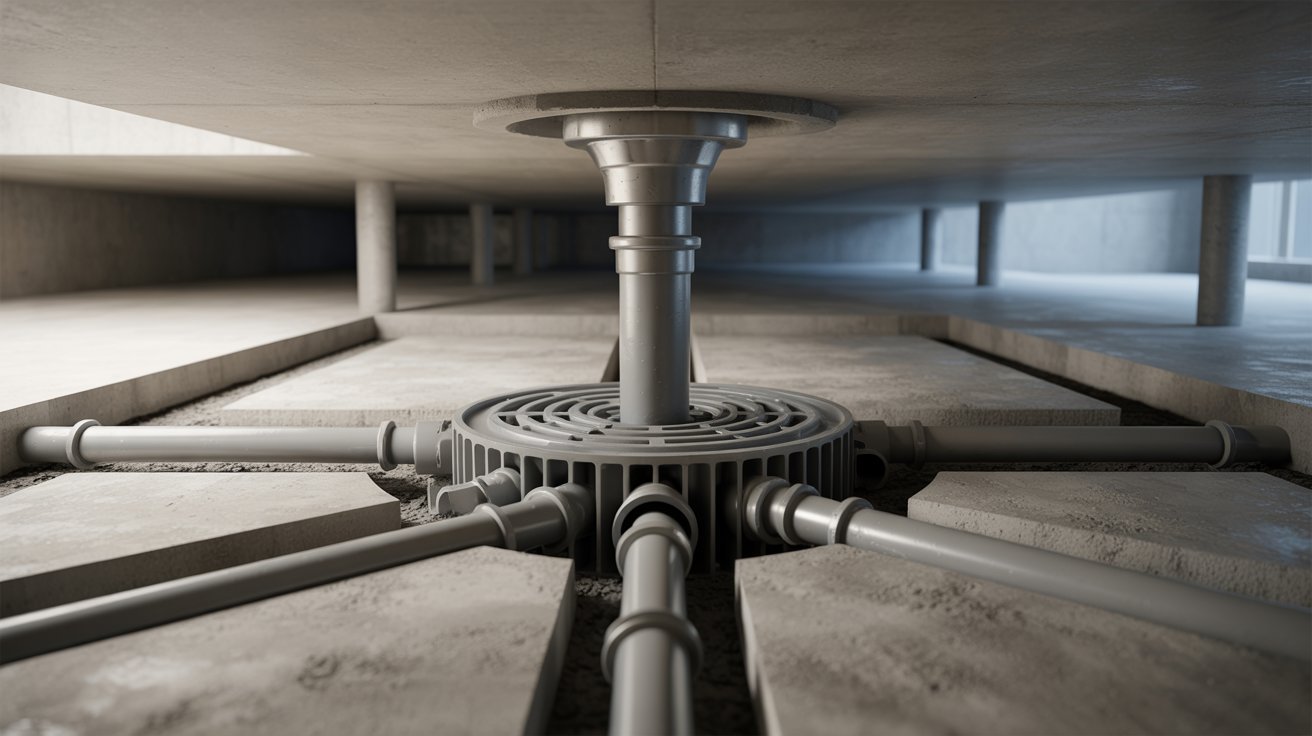
Hub drains are heavy-duty systems designed to connect multiple drainage lines into one central point. Think of them as the main collector for a larger drainage network.
They are built to handle high volumes of water. That makes them a good fit for commercial buildings, large homes, or basements with complex plumbing.
Because they tie multiple lines together, they reduce the number of separate drains you need. That simplifies your overall system and can lower installation costs.
They are durable and long-lasting when installed correctly. But they do require professional installation because of how they connect to your existing plumbing.
4. Backwater Valve Floor Drains
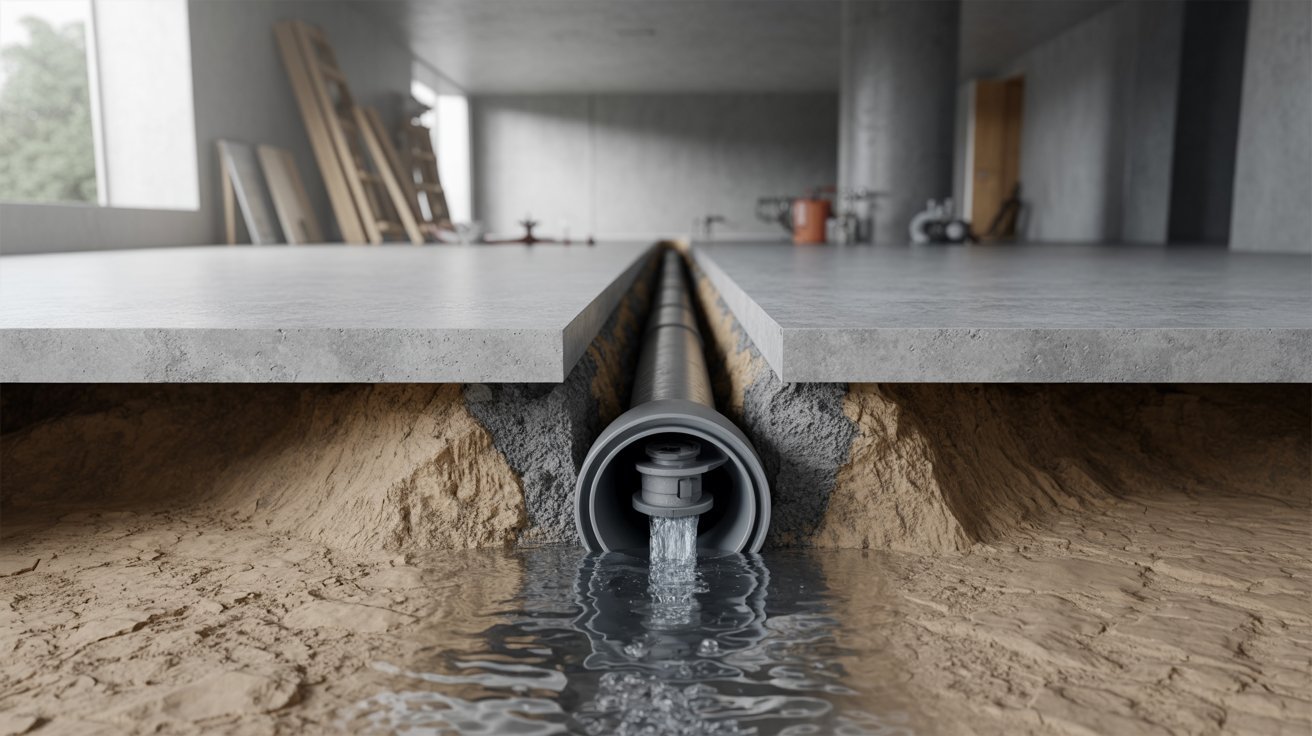
This type has one job: stop sewage from coming back into your basement. It uses a one-way valve that only allows water to flow out, not in.
If the main sewer line gets overloaded during heavy rain, sewage can push back into homes through floor drains. A backwater valve blocks that from happening.
This drain type is especially important if you live in a flood-prone area or a neighborhood with older sewer infrastructure. It can save you from a very unpleasant and costly cleanup.
The valve needs regular inspection to make sure it is not stuck or blocked. A faulty valve gives you no protection at all, so check it at least twice a year.
5. Sump Pump Connected Drains

This drain works as part of a larger sump pump system. Water collects in a pit below the drain, and the pump pushes it out of your home through a discharge pipe.
It is the go-to option for basements that sit below the water table. If groundwater regularly seeps in through walls or the floor, a sump system handles it better than a standard drain.
These systems are very effective. They actively move water rather than relying only on gravity. That makes a big difference in high-moisture environments.
The main drawback is that sump pumps run on electricity. If the power goes out during a storm, your pump stops working. A battery backup is a smart investment alongside this system.
6. Trench or Channel Drains
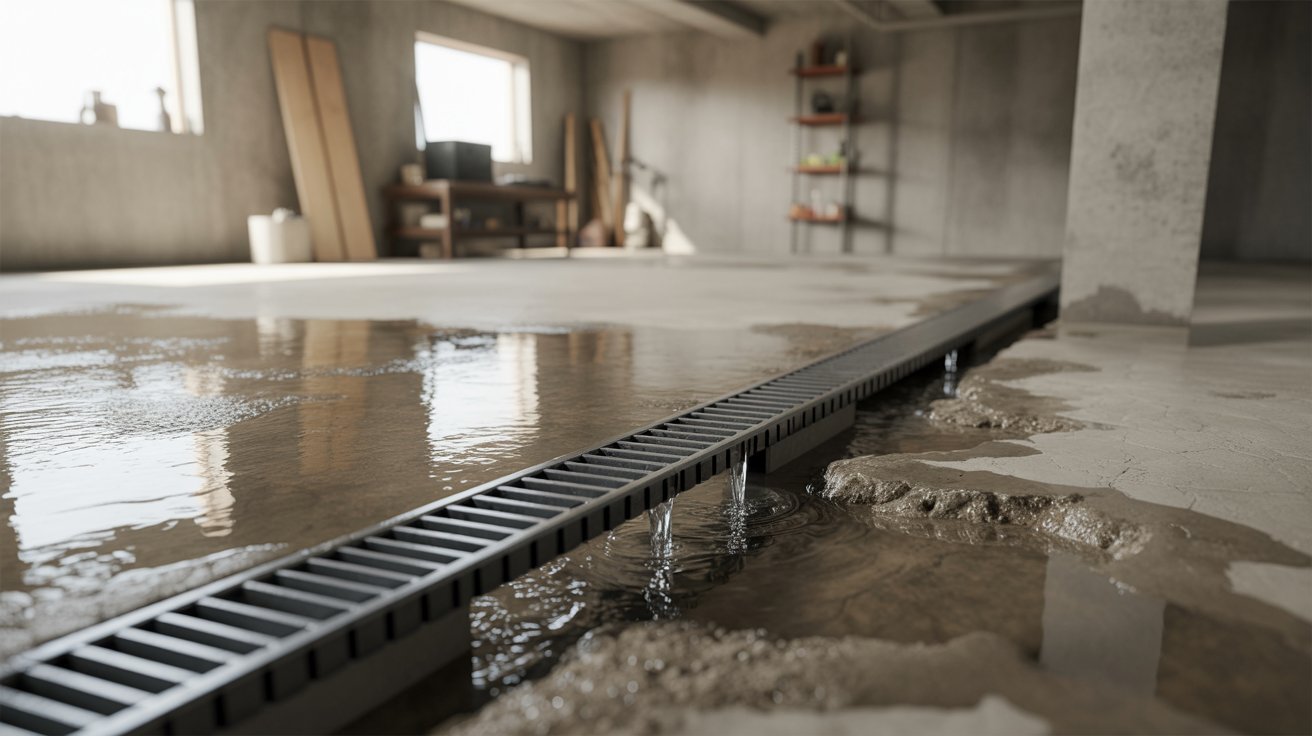
Trench drains are long, narrow channels installed along the base of walls or across the floor. Instead of one small drain point, you get a full line of drainage.
They collect water across a wide area all at once. This makes them far more efficient when large amounts of surface water need to move quickly.
You will often see them in garages, large workshops, or open basement spaces. Any place where water spreads across a big area benefits from this setup.
Cleaning a trench drain is straightforward. Most have a removable grate that lifts out so you can clear debris easily. Keeping them clean ensures they do not slow down during heavy use.
7. Floor Drain with Sediment Bucket

This drain has a built-in bucket or basket below the grate that catches debris before it enters the pipe. Think of it as a built-in filter for your drain.
It is a practical choice for basements used for storage or workshop activities. Dust, dirt, and small particles are common in these spaces, and this drain catches most of them.
The sediment bucket prevents the kind of clogged types of basement floor drains issues that come from debris building up deep inside the pipe. That means less snaking and fewer plumber calls.
Cleaning it is simple. You pull out the bucket, empty it, rinse it, and put it back. It takes two minutes and can save you a lot of trouble in the long run.
How Basement Floor Drains Work
Water always moves toward the lowest point. Basement floors are built with a slight slope, usually toward the drain.
That slope guides water naturally without needing any pressure or pumps.
Once water reaches the drain, it passes through a trap. The trap holds a small amount of water that acts as a barrier.
This barrier stops sewer gases from traveling back up through the pipe and into your home.
From the trap, water continues through the pipe and into either the main sewer line or a sump pit. The connection point depends on your home's plumbing setup and local building codes.
Proper installation depth matters a lot. If the drain sits too high, water pools around it. If it sits too low, it can interfere with the pipe slope and cause slow drainage.
Getting this right during installation makes a big difference in long-term performance.
How to Choose the Right Type of Basement Floor Drain
Picking the right drain comes down to knowing your basement and how you use it. A storage room has very different needs than a finished living space or a laundry area.
Before you decide, go through these key factors.
- Basement usage: A utility room can handle a basic open drain. A living space needs something with better odor control, like a trap primer drain.
- Water exposure level: If your basement sees water often, go for a high-capacity option like a trench drain or sump pump system.
- Flood risk in your area: Homes in flood-prone zones should have a backwater valve drain as a non-negotiable addition.
- Budget: Open grate drains and sediment bucket drains are affordable. Sump pump systems and hub drains cost more upfront but pay off over time.
- Maintenance ease: If you want low-maintenance, a sediment bucket drain or trap primer with an auto-primer saves you regular effort.
- Plumbing compatibility: Not every drain type works with every existing system. Check with a licensed plumber before buying.
Once you match the drain type to your specific situation, you will have a system that actually holds up. A drain that fits your basement from day one requires far less ongoing attention.
Conclusion
Your basement deserves better than a drain that fails when it matters most. I have seen what happens when the wrong system is in place, and it is never cheap to fix.
Now that you know the types of basement floor drains inside and out, you are in a great spot to make a smart call.
Talk to a licensed plumber, assess your space, and get the right system installed. Do not wait for a flood to push you into action.
Found this helpful? Share it with someone who needs it, or drop your question in the comments below.
Frequently Asked Questions
What Are the Most Common Types of Basement Floor Drains?
Open drains, trap primer drains, sump-connected drains, and backwater valve drains are the most widely used options. Each one suits a different level of water exposure and basement use.
Which Basement Floor Drain Is Best for Flooding Protection?
Backwater valve drains and sump pump systems offer the strongest defense against flooding. Both are especially recommended for homes in areas with heavy rainfall or aging sewer lines.
Why Do Basement Floor Drains Get Clogged?
Clogs usually happen due to debris buildup, sediment, poor maintenance habits, or the wrong drain type being installed for the space. Regular cleaning prevents most of these problems.
How Often Should Basement Floor Drains Be Cleaned?
Cleaning every three to six months is the general recommendation, though high-use basements may need it more often. Staying consistent is far better than dealing with a full blockage.
Can I Install a Basement Floor Drain Myself?
Simple drain replacements can be a DIY project, but anything involving new pipe connections or sump systems should be handled by a licensed plumber. Getting it wrong can create bigger problems down the line.